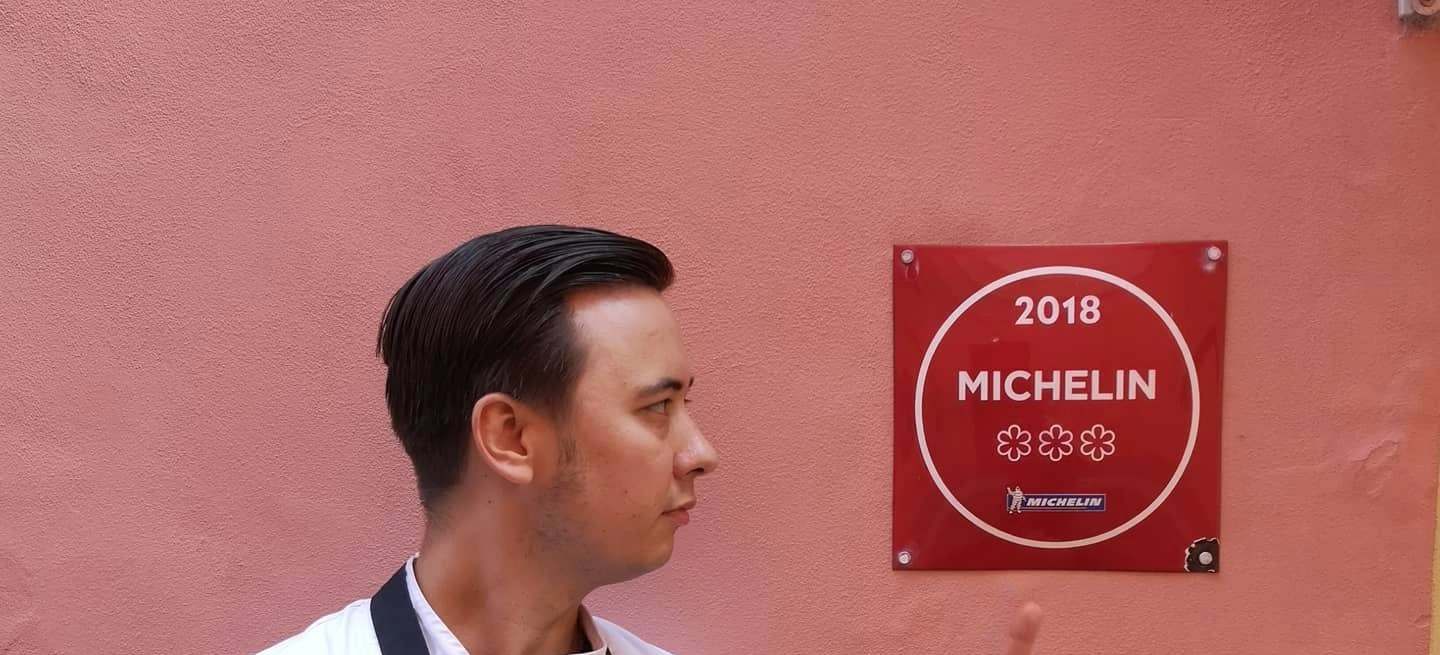
A Michelin star belongs to a restaurant, not to a chef. When a chef leaves, the stars stay with the restaurant. So when I call myself Michelin-trained, I mean exactly that: I trained at Osteria Francescana in Modena, a three-star restaurant, under Massimo Bottura, in both pastry and the main kitchen. I do not claim a star of my own.
The word Michelin is used loosely, on menus and in advertising, so it is worth being exact about what the guide judges and what the stars mean.
What the Michelin Guide is
The guide began in 1900 as a free booklet from the Michelin tyre company in France. The brothers André and Édouard Michelin wanted people to drive more, and drivers needed to know where to eat, where to sleep and where to find a mechanic. The first restaurant stars appeared in 1926. The scale of one, two and three stars followed in 1931.
Today the stars are given by inspectors who work for the guide. They eat anonymously, the guide pays for their meals, and a restaurant is often visited more than once before a decision is made. Michelin names five criteria:
- the quality of the ingredients
- mastery of cooking techniques
- harmony of flavours
- the personality of the chef, as it shows in the cooking
- consistency, across the whole menu and from one visit to the next
The three levels are described like this:
- One star: high-quality cooking, worth a stop.
- Two stars: excellent cooking, worth a detour.
- Three stars: exceptional cuisine, worth a special journey.
The guide also lists many restaurants without stars, and gives a Bib Gourmand to places that serve good food at moderate prices. When you travel, those pages are often the most useful part of the guide.
What the guide is not
Three more things about the guide are often misunderstood.
- It is not a prize for luxury. Stars are given for what is on the plate. Michelin says its inspectors do not judge the décor, the table setting or the service when they award stars. That is why street-food stalls in Asia have been given a star.
- It is not a map of every good kitchen. The guide covers a selection of countries and cities. A great deal of excellent cooking happens where its inspectors never go.
- It is not permanent. The selection is reviewed every year, and a restaurant can lose a star as well as gain one. That is why consistency is one of the five criteria.
What a three-star kitchen teaches
My time at Osteria Francescana marked my career for good and changed how I see gastronomy. Above all, it taught me what precision and discipline mean at the highest level. The lessons are simple to name, and they work in any kitchen.
Precision is measured, not guessed. Pastry teaches this first. A cream, a mousse or a tuile is a formula of weights, temperatures and times. A few grams too much gelatine, and a panna cotta turns rubbery instead of soft. Working in both pastry and the main kitchen showed me that savoury cooking needs the same exactness: in how long meat rests, how far a sauce is reduced, how much salt goes into a brine.
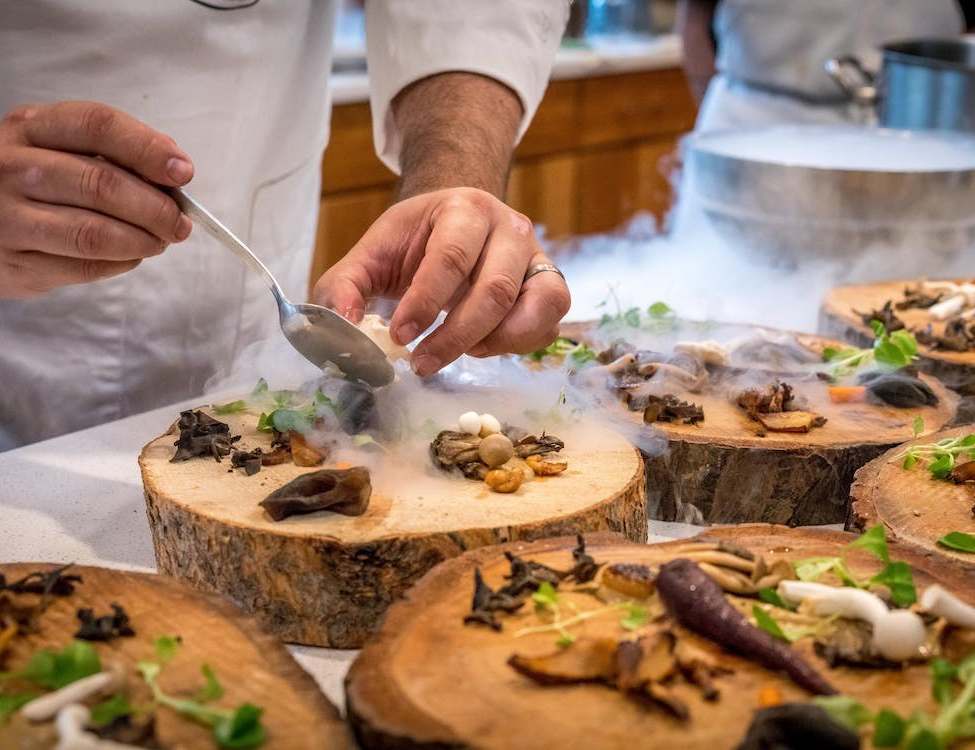
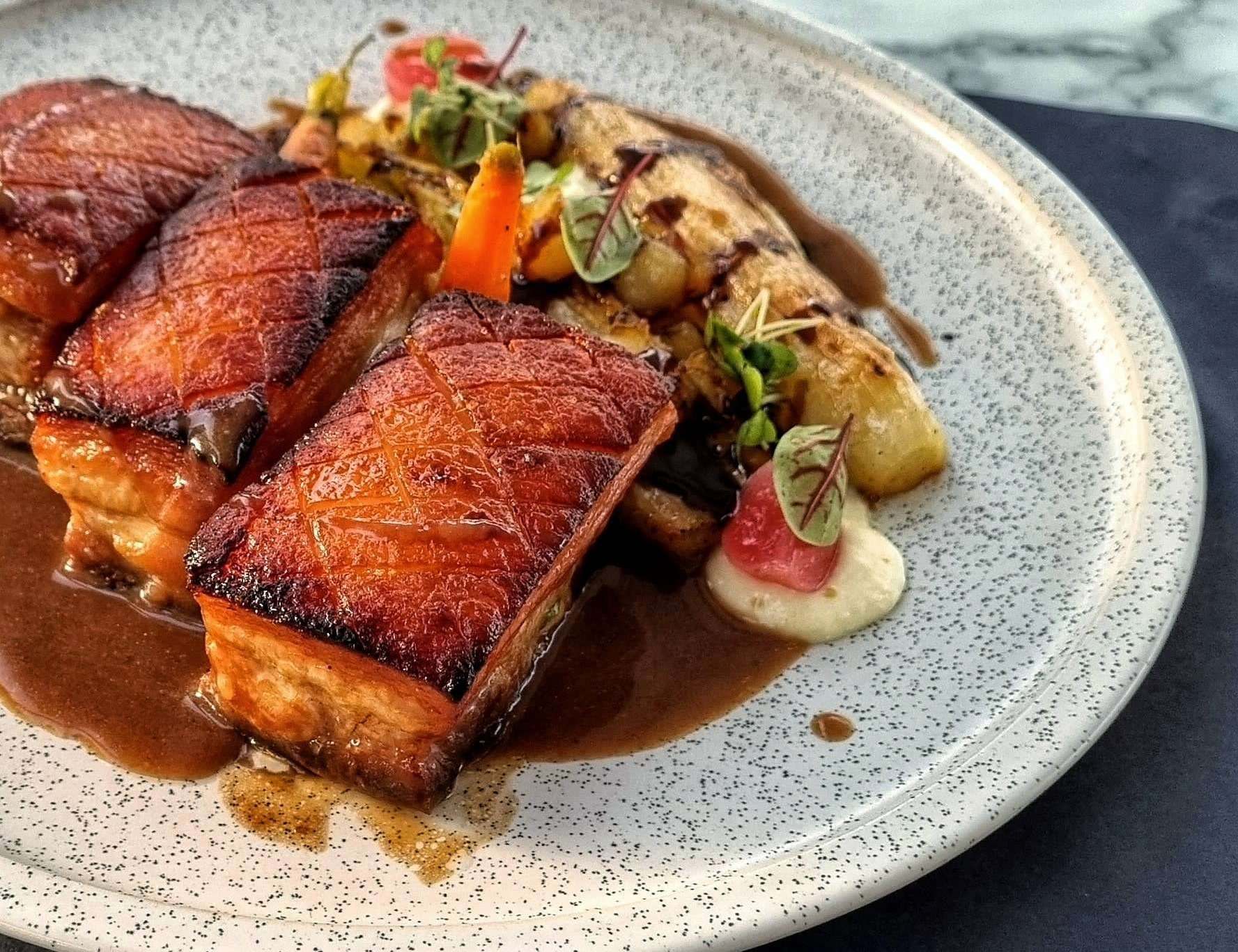
Every component is a small dish of its own. A plate at that level is built from many parts, and each part is made to its own standard. You can see the same idea in my Pistachio Bliss: six separate components in one bowl, from the crushed pistachio to the lace leaves on top. If one of them is weak, the guest tastes it.
Consistency is the real test. The tenth plate must be the same as the first, and a Saturday service must be as good as a Tuesday. I learned the value of standardised recipes early, as a line cook at the Hard Rock Cafe in Nicosia. At three-star level, the same discipline applies to every component on every plate.
Calm comes from preparation. A service runs well because the work was done before it started: every station set up, every component ready, every plate planned. I rely on this habit in every kitchen I cook in.
What this means at your table
I do not try to copy a three-star restaurant in a villa kitchen. That would miss the point. What I bring from Modena is the method:
- a menu planned in detail before the day
- components prepared before the guests arrive
- plates finished at the last moment, so they reach the table at their best
- the same standard on the last plate as on the first
For a restaurant or a hotel, this method means recipes your team can repeat on a busy night. That is the work I do in menu development. For a dinner at home, the method stays the same, but not everything from a restaurant belongs there. I explain which parts do in what fine dining is, and what it looks like at home.
The longer story, from an army kitchen to Modena and back to Cyprus, is on my about page.