When a dish tastes flat, the main ingredient is rarely the problem. Usually something is missing: salt, acid, a little sweetness, something crisp. Much of a chef’s work is finding what is missing and adding just enough of it.
This is how I think about flavour when I build a plate, with examples from my own dishes.
Salt and acid come first
Salt is the first thing I check, because it changes everything else. Used well, it does not make food taste salty. It makes food taste more of itself, and it also reduces bitterness. I season each part of a dish while I cook it, not only at the end, because a sauce, a purée and a garnish all need their own seasoning.
Salt can also be a technique. A cure of salt, usually with sugar, draws water out of fish and makes the flesh firmer and silkier. In my Beetroot Cured Salmon, the cure also colours the edges of the fish magenta.
Acid is the second thing I check. Lemon, lime, vinegar, pickles, fermented vegetables and yogurt all bring it. Acid makes rich food feel lighter and makes a heavy dish taste clean. If a dish already has enough salt and still tastes dull, it usually needs acid, not more salt.
Two examples from my menu:
- Salmon Tartare: pickled fennel and ponzu bring acid to the salmon and the avocado cream.
- Herb Crusted Salmon: pickled mustard seeds and fresh lime keep the fish and the vegetable couscous fresh.
Fat, sweetness and bitterness
Fat carries flavour and gives a dish its richness. Too much of it tires the palate after a few bites, so a rich plate needs something to cut through it: acid, bitterness, or both.
My Duck Fillet is built on that balance. The duck brings the fat. Sweet potato, served in several textures, brings sweetness. The forest fruit sauce, infused with aged rum, adds fruit and depth. Fermented red cabbage brings sourness, because fermentation turns sugars into acid, and that sourness is what keeps the plate from feeling heavy.
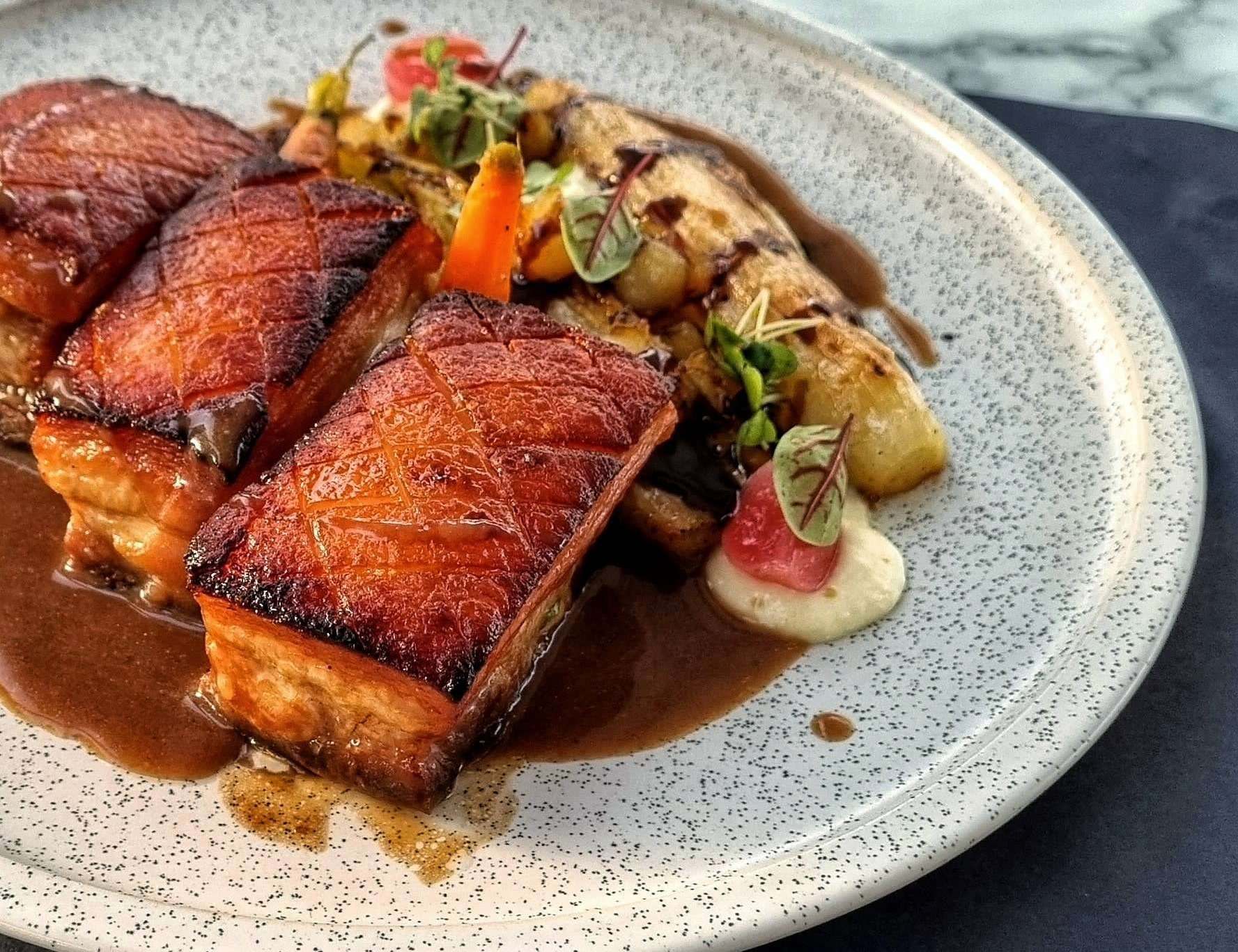
Bitterness is the taste that is easiest to leave out at home. A little of it makes sweet and fatty food taste less heavy. In my Smoked Pork Belly, the rich pork sits with braised chicory, which is naturally bitter, and with caramelised apples for sweetness, pickled radish for acid, parsnip cream and a vermouth jus. Each element balances another.
Sweetness also works in savoury food when salt is there to meet it. My Pork Belly Dumplings are served in clam chowder with maple syrup: the salt of the chowder and the sweetness of the syrup balance each other.
Chilli and aroma
Chilli should add to a dish, not hide its other flavours. I give chilli something cool or creamy to meet: cucumber, yogurt, cream, a fresh cheese.
My Hamachi Tiradito shows how much small elements can do. The raw hamachi slices sit in an amber dressing. Red chilli brings heat. Cucumber cools it and adds crunch. Orange fish roe brings salt and a small burst in the mouth. Black sesame adds a nutty, slightly bitter note, and micro herbs and edible flowers bring aroma. In my Zucchini Fritters, chilli sits with yogurt, feta and yuzu, so the heat arrives with coolness, salt and citrus.
Aroma matters more than most people expect, because much of what we call flavour is smell. That is why so many of my plates are finished with a herb oil: dill oil on the Prawn Risotto, chive oil on the Salmon Tartare, basil oil on the Raspberry Basil Panna Cotta. A few drops of herb oil carry the smell of fresh herbs to the table. Smoke works in the same way, as an aroma: smoked prawns, smoked pork belly, a smoked goat cheese cream.
Texture and temperature
A plate where everything is soft becomes boring after three bites. I usually add something crisp: parmesan chips on the Zucchini Fritters, caramelised walnuts on the Beetroot Risotto, caramelised hazelnuts on the panna cotta, a crumb on the Calamari and Black Spanakorizo.
Temperature changes taste too. Cold dulls flavour, sweetness most of all, so a cold dish usually needs slightly stronger seasoning than the same dish served warm. A raw fish dish such as a tiradito must be tasted cold, at the temperature the guest will eat it. A warm sauce tasted on the stove will taste sweeter than it will on the plate a few minutes later.
How I taste a plate before it goes out
This is the check I use, and it works in a home kitchen as well as in a restaurant:
- Taste each element on its own. The sauce, the purée and the garnish should each be seasoned correctly.
- Taste a full forkful with everything on it. That is what the guest eats, and it often tastes different from the parts.
- Ask what is missing. Flat needs salt. Heavy needs acid. Harsh needs a little sweetness or fat. If every bite tastes the same, it needs bitterness, herbs or crunch.
- Taste at serving temperature. Taste cold dishes cold and hot dishes hot.
- Write it down. A balance you cannot repeat is luck.
The last point matters most in a restaurant, where the dish must taste the same on every service, whoever is cooking. That is why, for restaurant kitchens, I write standard recipes with quantities, methods and plating guidelines.